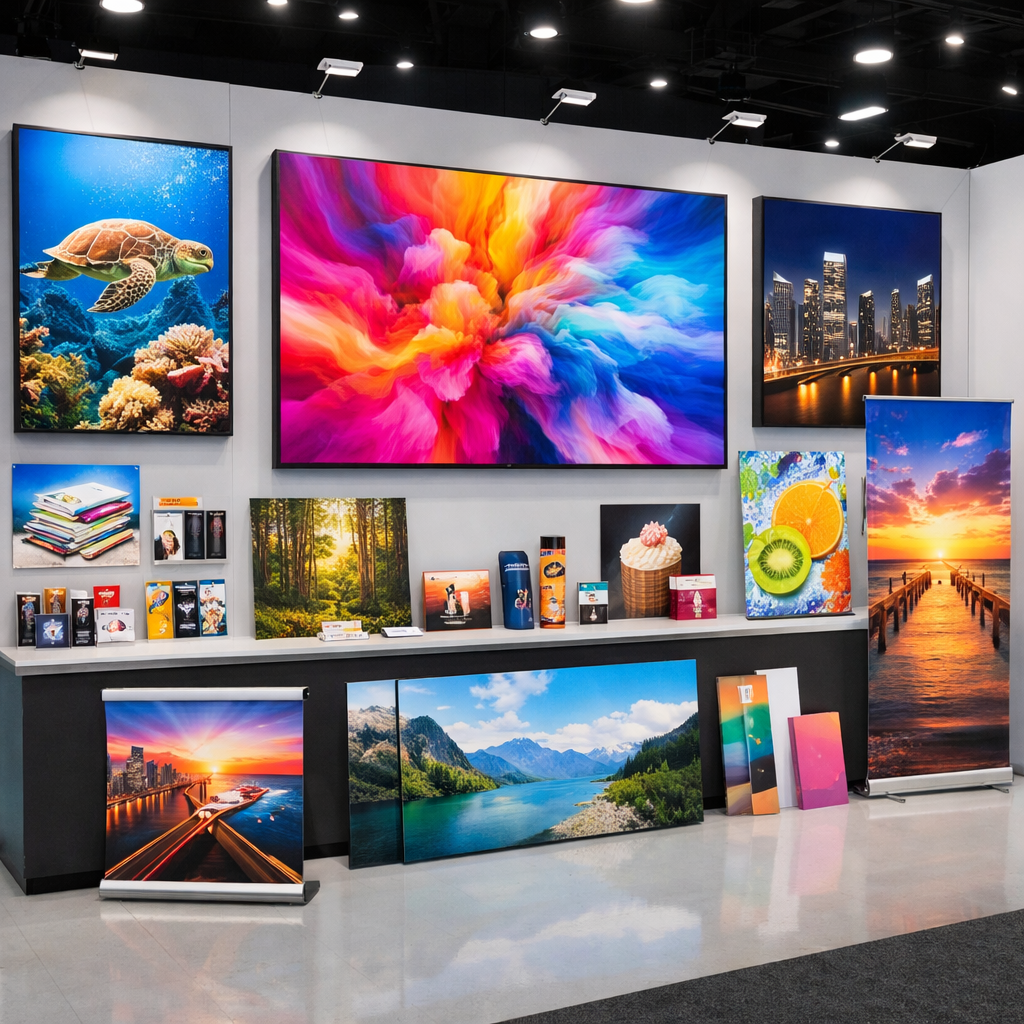
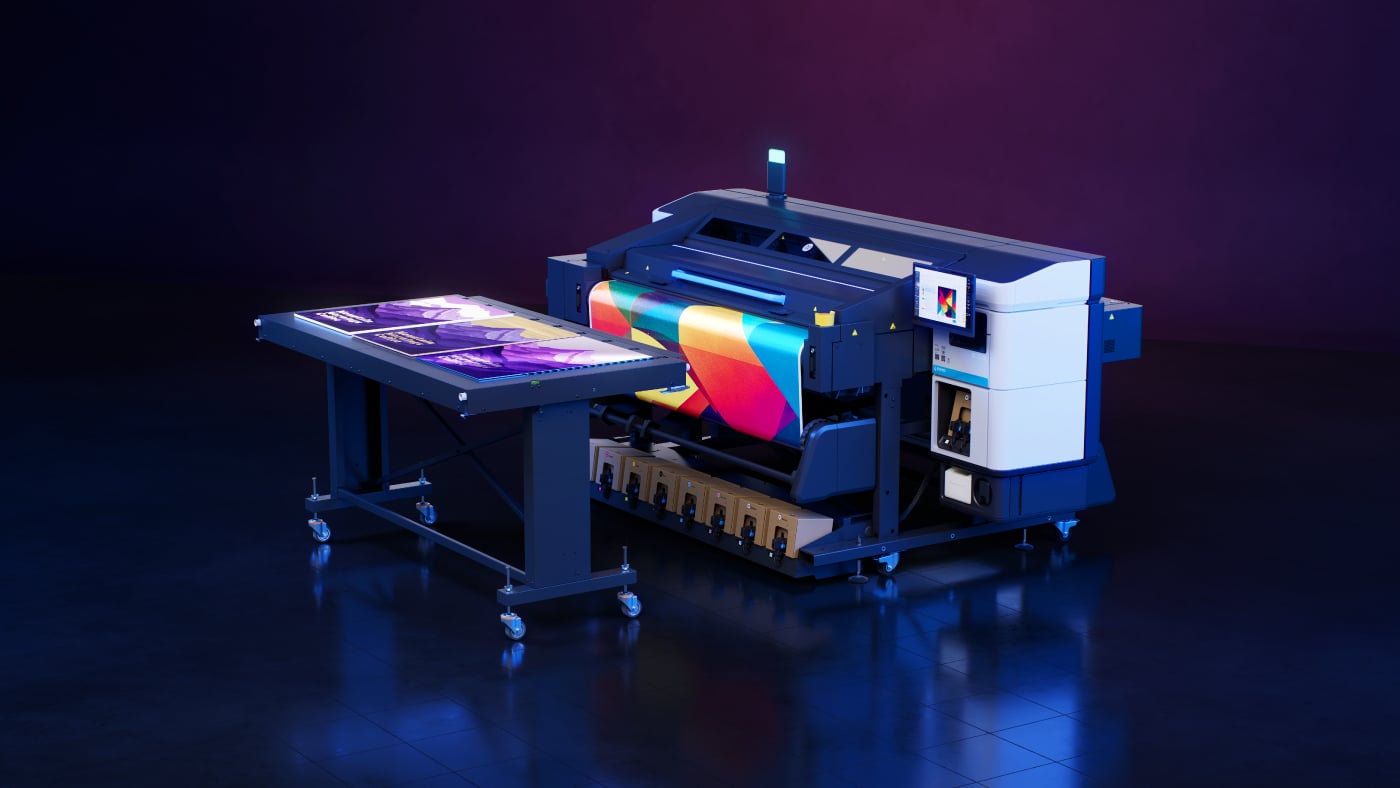
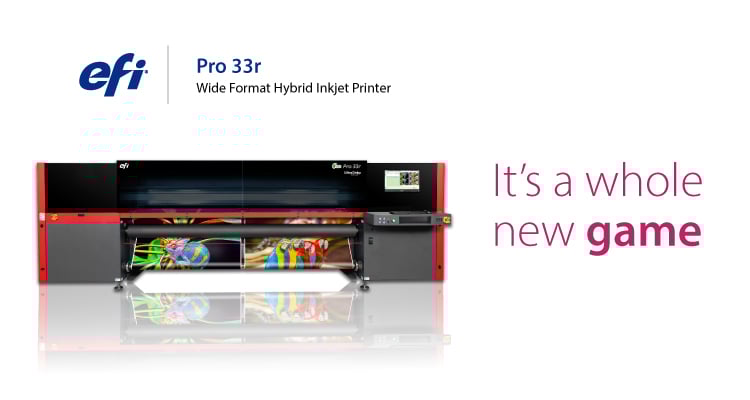
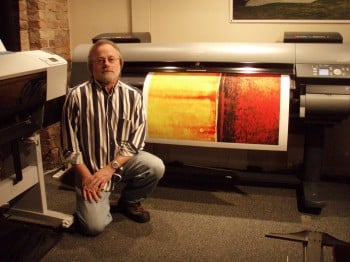
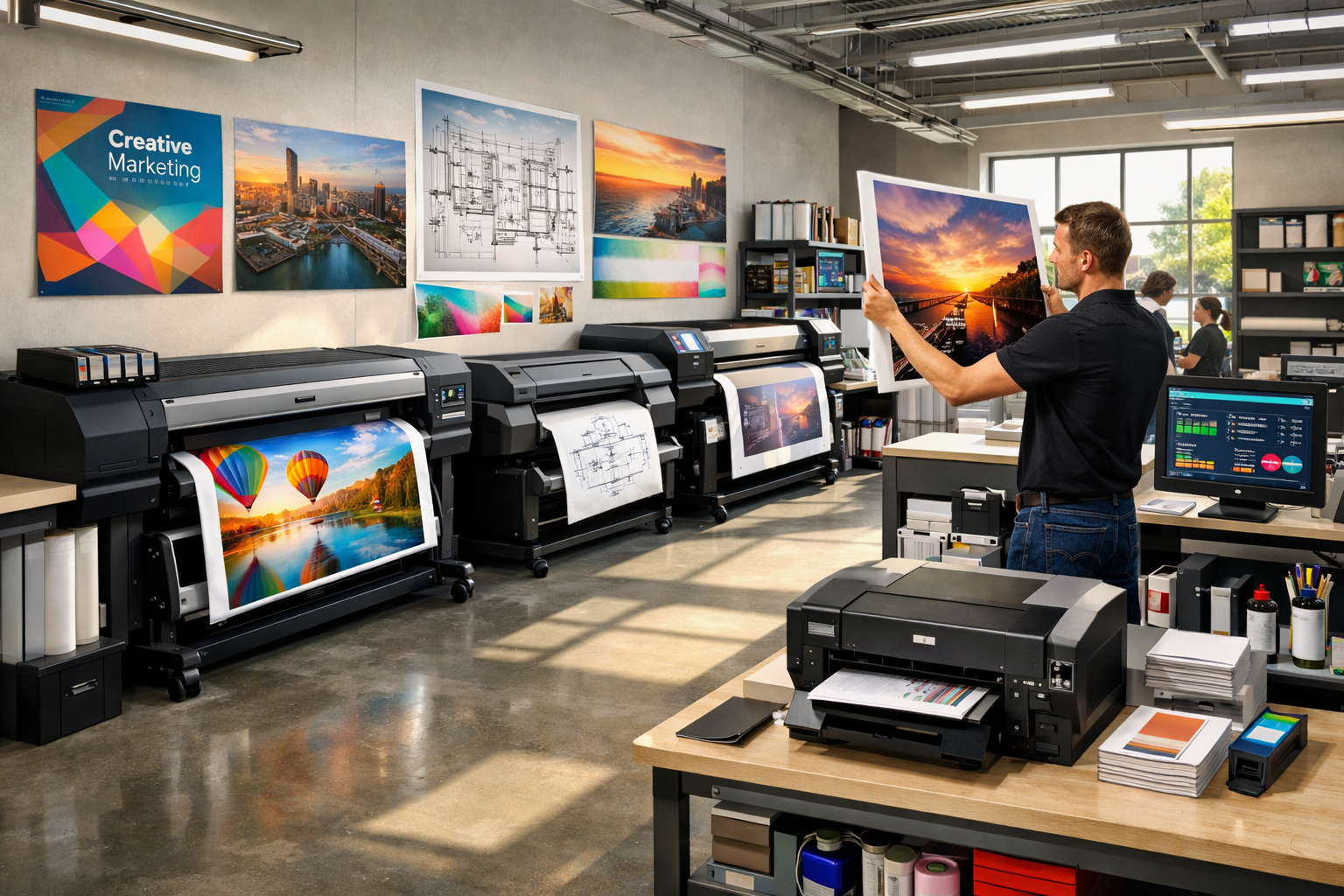
Wide-format printers are used to produce large-scale graphics and technical prints, from banners, posters, and retail displays to wallcoverings, vehicle wraps, backlit signs, fabric graphics, and CAD drawings. Unlike standard office printers, wide-format printers typically start at 24 inches wide and can print on paper, vinyl, fabric, canvas, film, rigid substrates, and other specialty media.
For print shops, the real value is not just the size of the output. It is the range of applications one machine can support. The right setup can help a shop expand into higher-value work, serve more customer types, and bring more outsourced jobs in-house.
Who Uses Wide-Format Printers?
Wide-format printing shows up in more industries than most people realize. Commercial print and sign shops are the obvious users—they run wide-format equipment as their core production tool, producing everything from trade show displays to fleet graphics to retail campaigns. But they're not the only ones.
In-house marketing and creative teams at mid-to-large companies have been quietly building out wide-format capabilities for years. Retailers use it to produce seasonal promotions and in-store graphics without waiting on outside vendors. Corporate campuses print branded environmental graphics and wayfinding systems. Universities run their own wide-format operations for everything from event signage to research posters.
Beyond that, architecture and engineering firms use wide format for technical drawings and site plans. Museums and galleries print exhibition graphics and reproduction artwork. Healthcare systems produce patient-facing signage, compliance graphics, and wayfinding across large facilities.
The common thread is volume and customization – any organization that produces a steady stream of large-format visual content has a reason to evaluate whether doing it in-house makes more sense than outsourcing. For commercial shops, that same diversity of end users represents the customer base. Knowing which industries rely on wide-format output is the first step toward understanding which applications to offer.
Marketing and Promotional Applications
Banners, Posters, and Event Displays
This segment is a low-risk start for most printing shops, and for good reason; demand is consistent, and the production workflow is straightforward. Vinyl banners, foam board posters, trade show backdrops, step-and-repeat displays, and retractable banner stands all fall into this category. Print quality matters, but so does turnaround. Event clients often need work on short notice, and shops that can reliably deliver large-format graphics in 24 to 48 hours tend to hold onto that business.
Retail and Point-of-Purchase Graphics
Over 70% of retail businesses globally now rely on large-format printers for banners, window graphics, and in-store promotions. Window clings, floor graphics, shelf talkers, endcap displays, and seasonal campaign materials are all part of this category. Retail clients with multiple locations often run rotating campaigns, which means steady repeat work for shops that can turn jobs around reliably.
Signage and Environmental Graphics
Indoor and Outdoor Signage
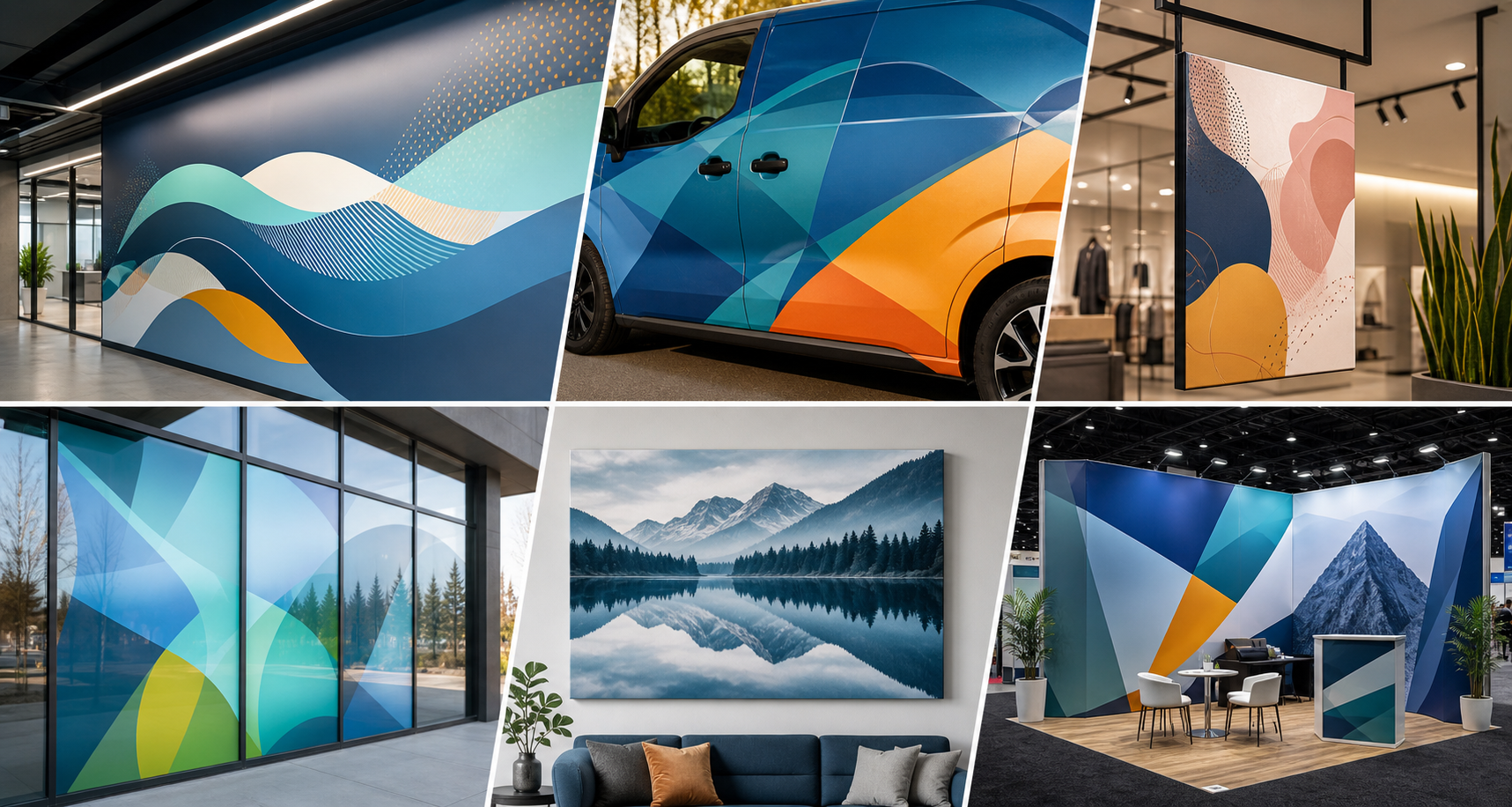
The signage category spans nearly every industry, from directional and safety signage to menu boards, building identification, and construction site graphics. For anything going outside, substrate and ink choice matter as much as the hardware — the right wide format printer ink and toner is what separates graphics that hold up through a full outdoor season from those that fade or fail early. Outdoor banners typically run on 13 oz. scrim vinyl or mesh vinyl for wind resistance; indoor signage commonly uses matte polypropylene or foam board.
Wallcoverings and Branded Spaces
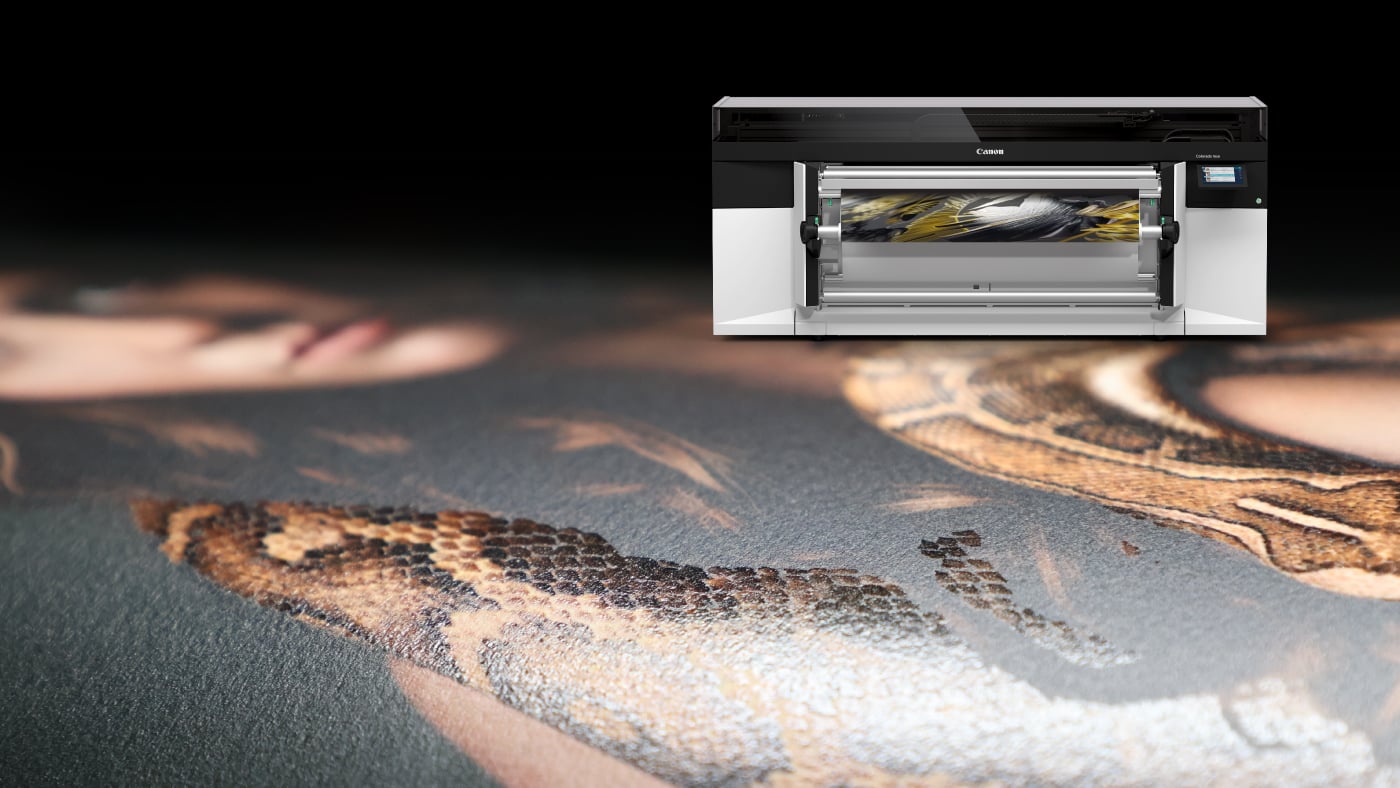
Wide-format inkjet revenues are expected to grow in part due to expansion into more valuable applications such as décor printing. Printed wallcoverings for corporate offices, hospitality interiors, retail environments, and healthcare facilities have become a serious revenue category for shops with the right equipment and substrates. The appeal from the client side is the ability to transform a space with fully custom graphics rather than off-the-shelf options. From the production side, it's a higher-margin application that rewards shops who've invested in substrate knowledge and color accuracy.
Vehicle Graphics and Mobile Advertising
Vehicle wraps are one of the most technically demanding wide-format applications, and one of the most profitable for shops that do them well. Full and partial wraps require precise color matching, dimensional accuracy, and films specifically engineered to conform around curves and complex body panels. Fleet graphics for commercial vehicles, transit advertising, and equipment branding all fall into this space.
Vehicle graphics have seen over 35% growth in demand due to their reach as a mobile advertising tool. Wraps require cast vinyl rather than cheaper calendered vinyl. Cast film conforms to curves and recesses without shrinking back or lifting at the edges, which separates a professional installation from a callback. For print shops, vehicle graphics tend to mean higher job values and a reliable client base. Fleet managers, marketing agencies, and dealerships come back when they trust the quality and turnaround. Getting the substrate and ink combination right is critical; poor adhesion or premature fading on a wrapped vehicle is expensive to remedy and difficult to recover from reputationally.
Specialty and High-Impact Applications
Backlit Displays
Backlit graphics, used in lightboxes, airport displays, retail signage, and menu boards, require films and inks that perform differently from those used in standard frontlit applications. The substrate needs to transmit light evenly, and the ink density needs to be calibrated to the graphic's appearance under illumination rather than in ambient light. Shops that invest in properly profiling their backlit media can produce output that looks dramatically better than shops that print backlit applications on generic settings.
Textile and Soft Signage
Fabric graphics printed on polyester or similar textiles via dye sublimation have taken a significant share from rigid and vinyl graphics in trade show and event environments. They're lighter, easier to ship, wrinkle-resistant when handled properly, and can be laundered and reused. For shops already running dye sublimation for apparel or promotional products, adding soft signage to the service mix is often a natural extension. For those starting from scratch, it requires both the right printer and a working knowledge of fabric substrates and finishing.
Technical and CAD Printing
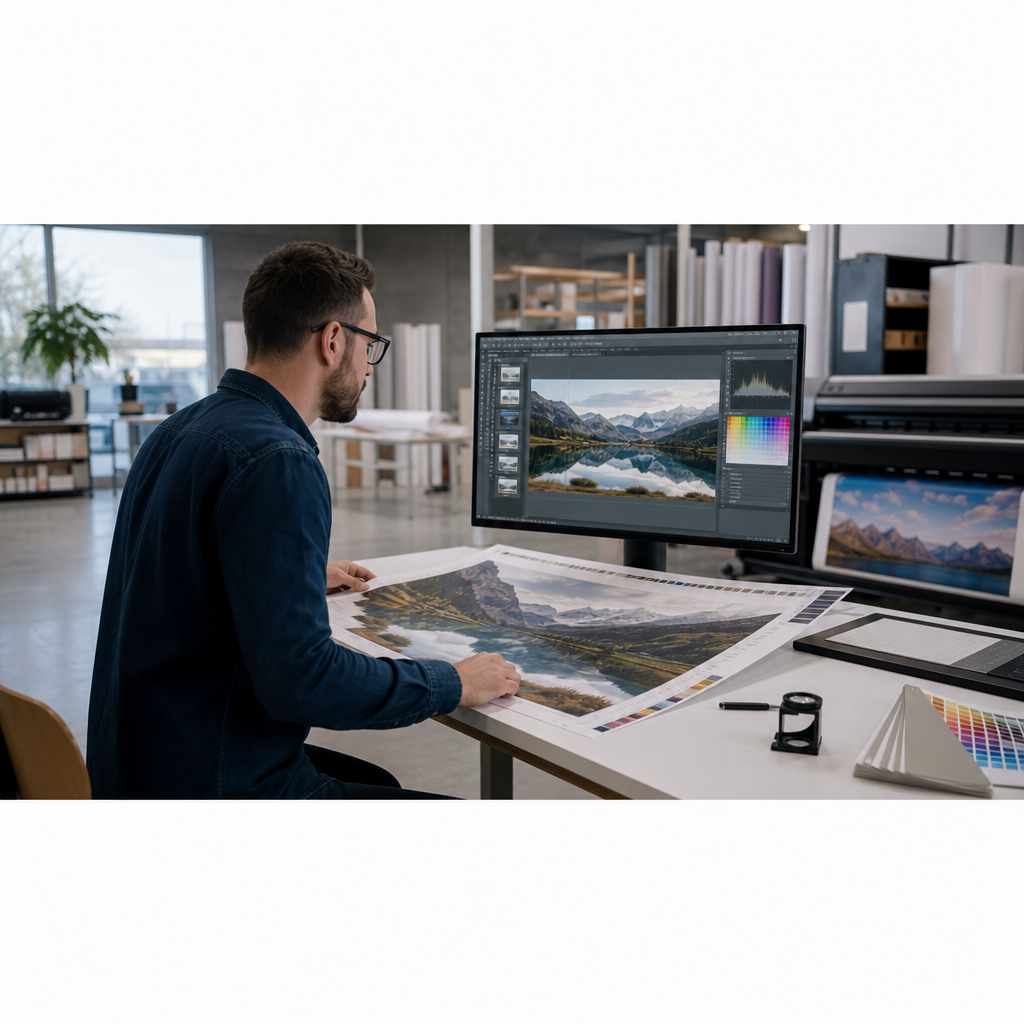
Architecture firms, engineering companies, construction contractors, and facilities management teams all need large-format output for technical drawings, blueprints, site plans, and schematics. This is a different kind of wide-format work because accuracy and line quality matter more than color vibrancy, and clients often need multiple copies of multipage drawing sets rather than single large-format prints.
The 24-36 inch print width segment is highly favored by commercial print providers, design studios, and in-plant facilities for applications including architectural drawings and technical schematics. In-house print operations at architecture and engineering firms represent a steady institutional market for shops positioned to serve them, and the workflow is less demanding than color-critical graphics work.
Choosing the Right Applications for Your Business
Not every application on this list makes sense for every shop. The right mix depends on your equipment's ink technology, your substrate inventory, your team's production expertise, and the markets you're already serving. A shop running eco-solvent equipment is well-positioned for vehicle graphics and outdoor signage. A shop with latex capabilities has more flexibility for indoor applications and can more easily pursue wallcovering and soft signage work. Dye sublimation opens the door to textiles.
A good place to start is by looking at what your best customers are already buying elsewhere. If retail clients are outsourcing window graphics, wall murals, or seasonal signage, those are likely your shortest path to new revenue — and usually require less new equipment than you'd expect.
Getting the application mix right also means understanding how wide-format ink types affect what your hardware can produce, and knowing which wide-format printing mistakes tend to cost shops the most before they show up on your floor. The operational side – how to scale into new applications without creating bottlenecks – is a separate conversation about your wide-format printing workflow.
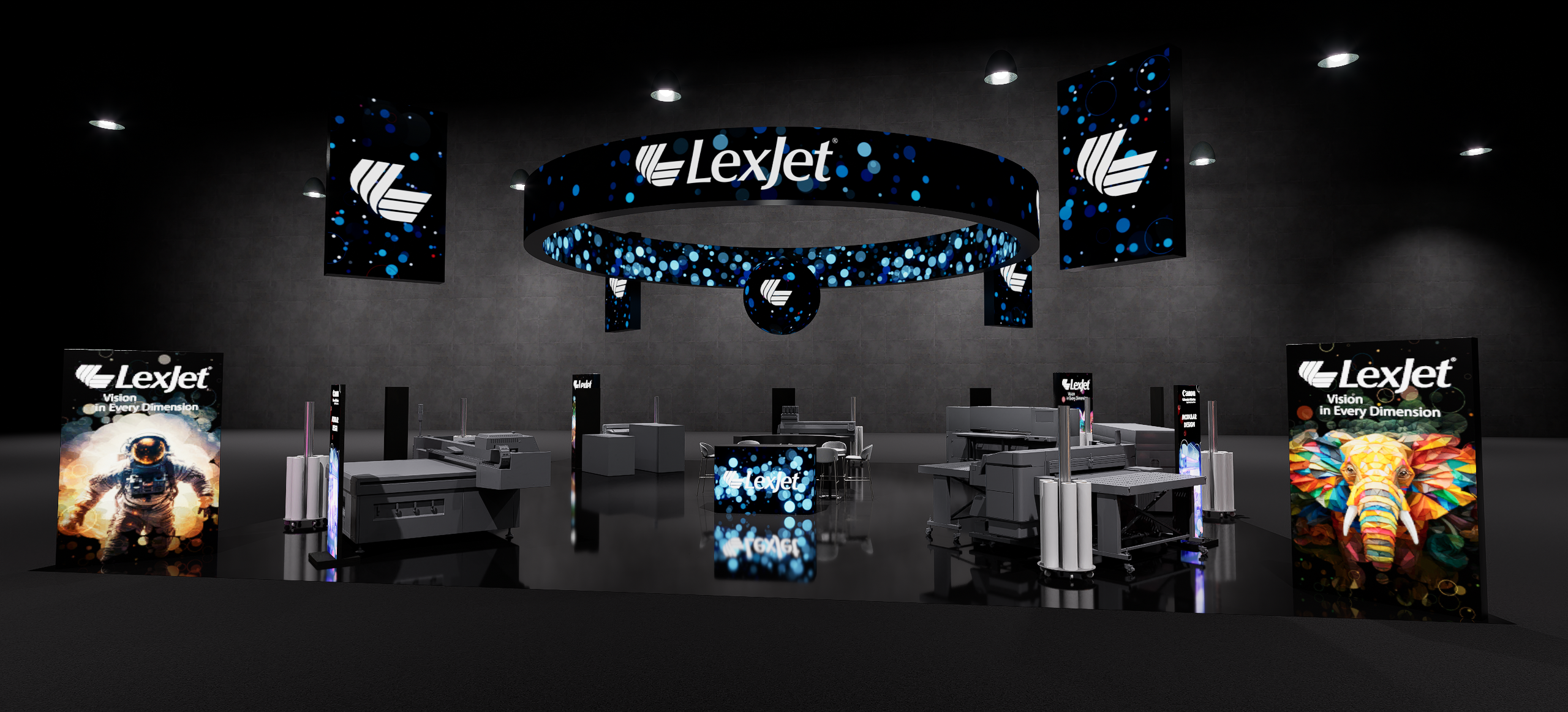
LexJet's team can help you work through all of it: what your current equipment can support, which substrates make sense, and what adding a new application category actually requires.
1 SNS Insider. Large Format Printer Market Size, Trends & Share Report
https://www.snsinsider.com/reports/large-format-printer-market-1879
2 Digital Output. Remaining Profitable: 2025 Wide Format Graphics Inkjet Forecast. https://digitaloutput.net/remaining-profitable/
3 SNS Insider. Large Format Printer Market Size, Trends & Share Report
https://www.snsinsider.com/reports/large-format-printer-market-1879
%20200-86.png?width=200&height=86&name=LexJet_PNG%20(1)%20200-86.png "LexJet")



.jpg)



Post a comment