Wall graphics have become one of the fastest-growing opportunities for print providers looking to expand beyond traditional signage.
From corporate offices and retail stores to restaurants, schools, healthcare facilities, and hotels, businesses are investing in branded interiors that create memorable customer experiences. Many shops already have the equipment needed to serve this market. Success comes from selecting the right materials, building a repeatable workflow, and understanding how each application affects production from design through installation.
Why Wall Graphics Are a Smart Expansion
They turn blank walls into branded spaces
Wall graphics transform offices, retail stores, restaurants, schools, and healthcare facilities into branded environments that improve wayfinding and create memorable customer experiences. From lobby murals and donor walls to feature walls and corporate branding, these applications often become permanent design elements, making them higher-value opportunities than many traditional signs.
They create repeat opportunities
Interior graphics are updated far more often than many permanent signs. Seasonal retail campaigns, office renovations, restaurant refreshes, and school initiatives all create opportunities to return to existing customers with new projects, helping generate recurring business over time.
They fit any existing wide-format workflows
Compatible wide-format printers, wide-format media, finishing equipment, and installation partners already provide much of the foundation needed to produce interior graphics. In many cases, it's simply a matter of applying existing production capabilities to new markets.
Common Wall Graphics and Décor Applications
Branded wall murals
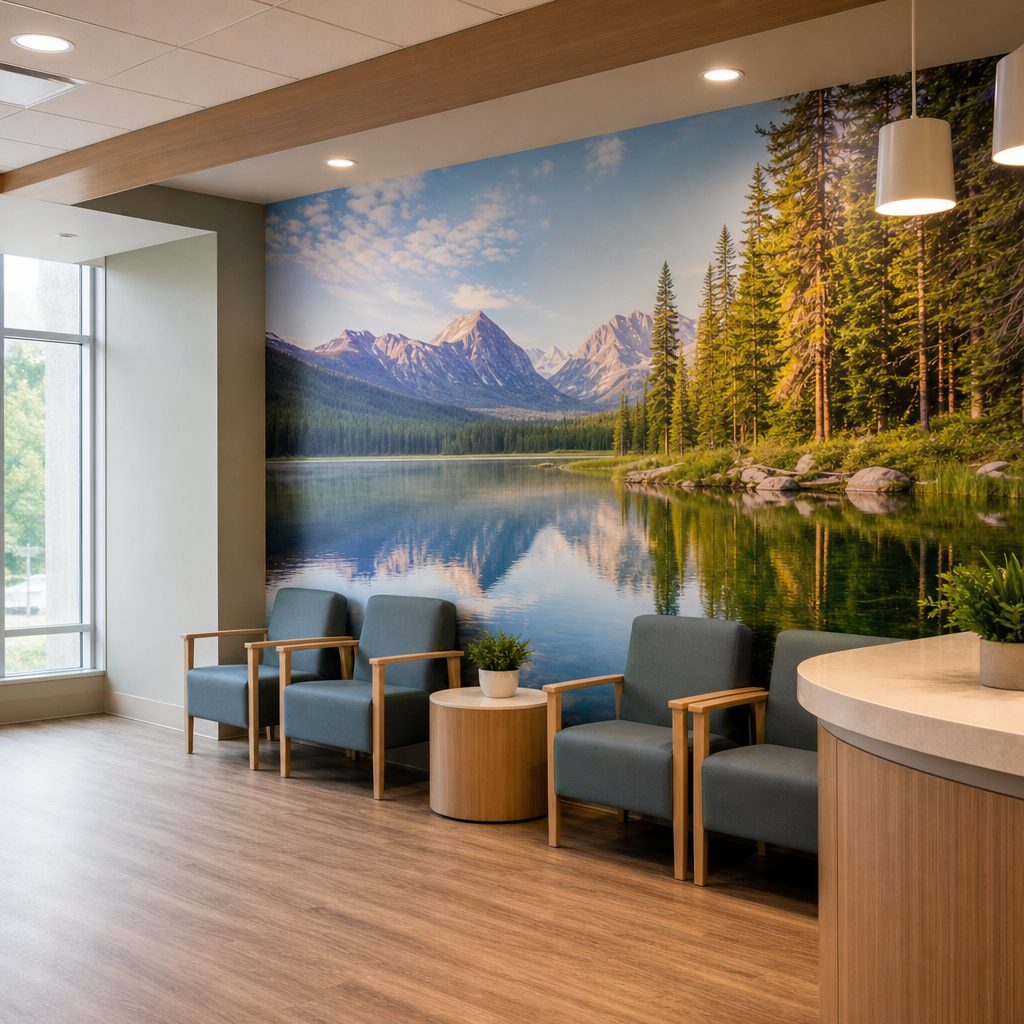
Large-format murals remain one of the most popular interior graphics applications because they combine branding with décor.
Corporate offices, schools, restaurants, healthcare facilities, and fitness centers all use wall murals to create welcoming entrances, reinforce company culture, and improve customer experiences.
Retail and seasonal graphics
Wall graphics help support product launches, seasonal promotions, fitting room graphics, and feature displays while complementing window graphics and point-of-purchase signage. Together, these applications create a consistent visual experience throughout the store.
Hospitality and interior décor
Hotels, restaurants, event venues, and commercial interiors frequently incorporate custom graphics as part of their overall design.
Selecting the appropriate wallcovering media helps ensure graphics not only complement the space but also perform well in the environment they're designed for.
Canvas, photo, and fine art prints
Canvas wraps, fine art reproductions, and photo enlargements remain popular décor products for photographers, artists, galleries, museums, and interior designers. Because customers are investing in finished artwork rather than simply printed graphics, these applications often offer greater perceived value and stronger margins.
Environmental and experiential graphics
Museums, campuses, corporate headquarters, and public facilities use these graphics to guide visitors while creating memorable experiences through donor walls, exhibits, directional signage, and branded interiors.
Choose the Right Customers First
Start with existing business clients
One of the easiest ways to expand into wall graphics is by looking at customers you already serve.
Businesses ordering banners, signs, or marketing materials may also benefit from lobby graphics, conference room branding, employee recognition walls, or custom backdrops. Expanding an existing relationship is often more efficient than finding entirely new customers.
Build retail packages
Instead of quoting individual graphics, consider packaging multiple applications into a complete solution. Combining wall graphics with window graphics, floor graphics, posters, and POP signage helps retailers create coordinated campaigns while increasing the value of each project.
Partner with photographers and designers
Photographers, interior designers, artists, and decorators regularly need reliable production partners. Offering interior décor media, canvas printing, and fine art reproduction services can open additional revenue opportunities while establishing long-term creative partnerships.
Select the Right Materials for the Job
Match media to the wall surface
Every installation surface presents different challenges. Smooth drywall, textured walls, brick, glass, concrete, and painted panels all affect adhesion, removability, and long-term performance. Choosing the appropriate wall mural materials begins with understanding the surface the graphic will be applied to.
Check paint condition and project duration
Fresh paint, low-VOC coatings, temporary promotions, and permanent installations all influence media selection. Matching the expected lifespan of the graphic to both the wall surface and the adhesive system helps improve installation success while reducing removal issues later.
Choose the right adhesive and finish
Removable, repositionable, permanent, and high-tack adhesives all serve different purposes, while matte, satin, gloss, fabric, canvas, and textured finishes each create a different visual effect. Selecting the right combination helps the finished graphic perform as intended.
Test before full production
Testing remains one of the simplest ways to avoid costly mistakes. A small sample panel allows installers to verify adhesion, appearance, removability, and durability before committing to full production, particularly on unfamiliar wall surfaces or newly painted environments.
Match Printer, Ink, and Workflow
Confirm printer width and media compatibility
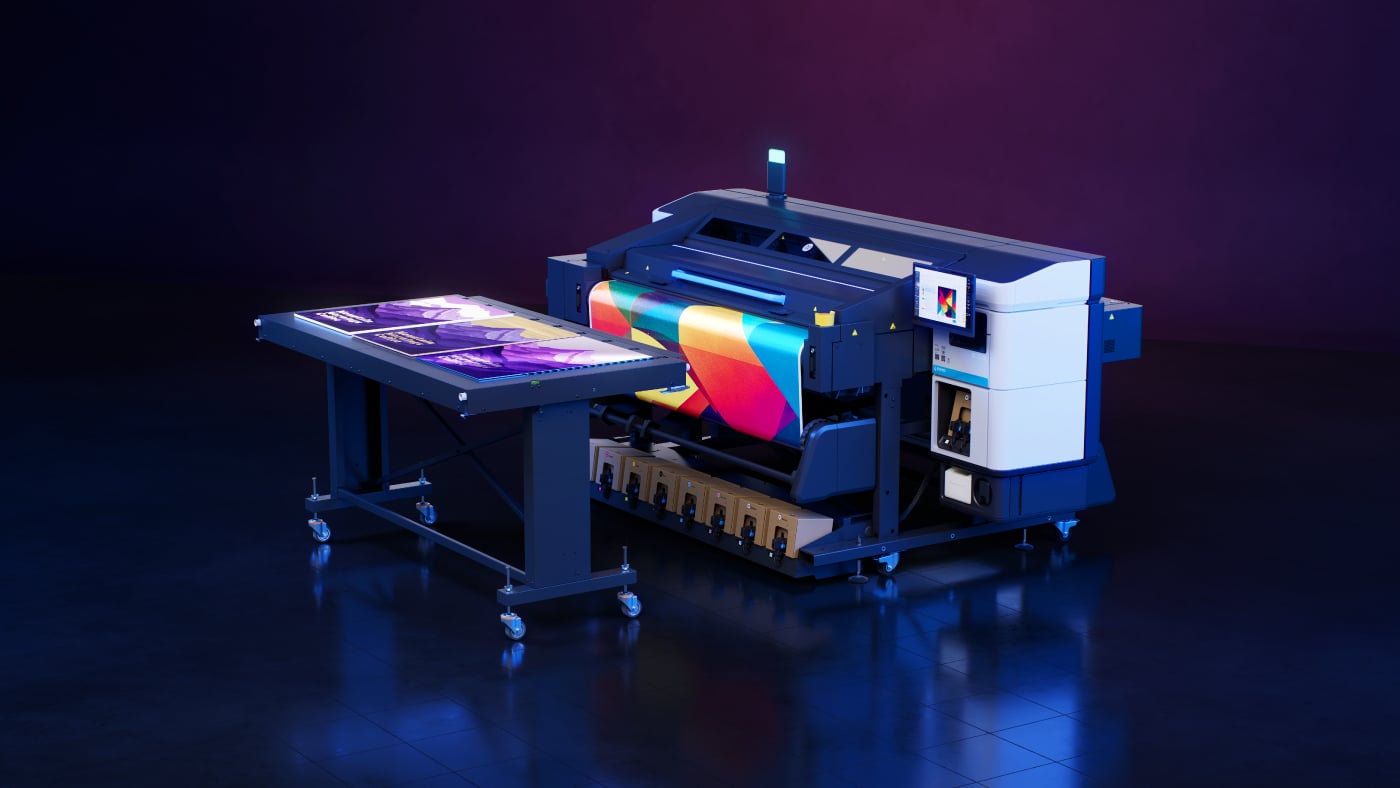
Selecting media compatible with both the printer and ink technology helps maintain image quality, while wider printers can reduce the number of seams required across oversized graphics.
Plan for color consistency
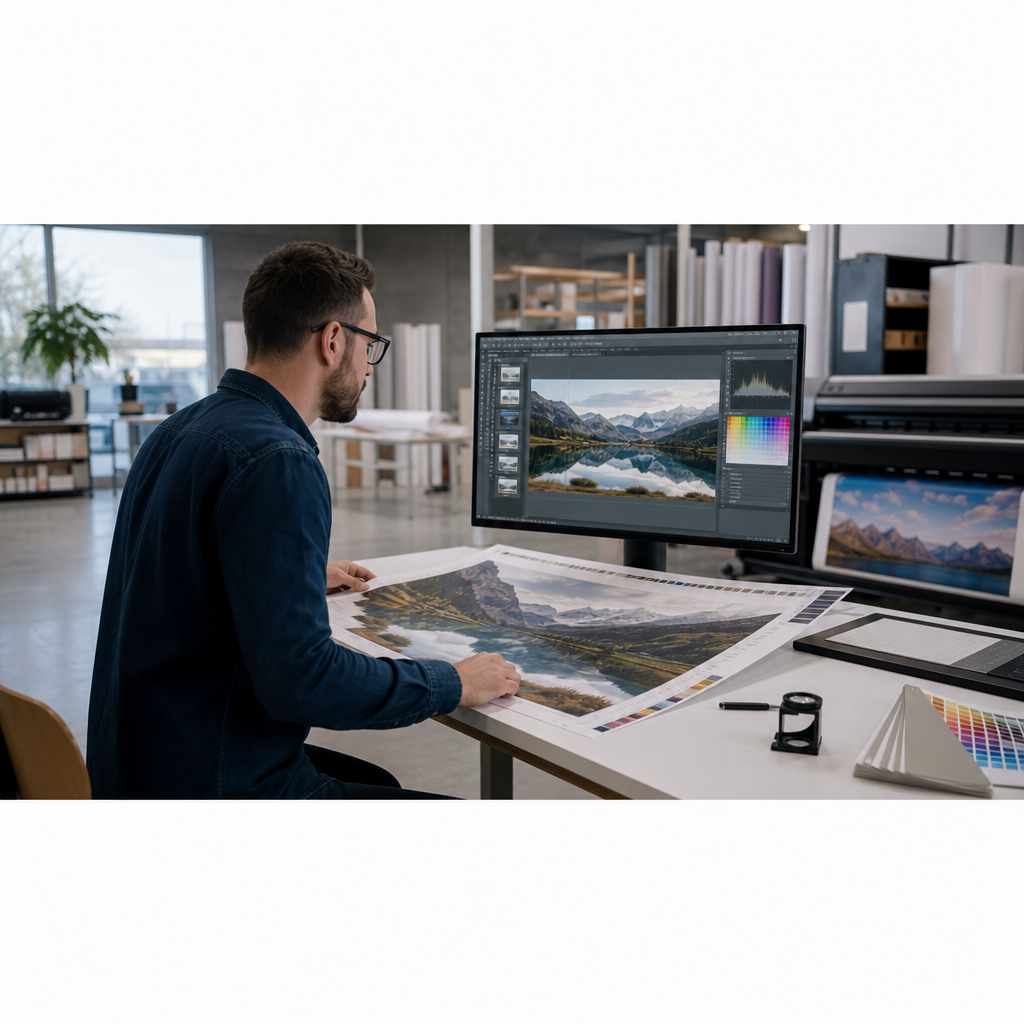
Color consistency becomes increasingly important as projects grow. Multi-panel murals, branded interiors, and corporate graphics rely on accurate color management, so every panel matches once installed.
Account for drying and finishing time
Time for lamination, trimming, packaging, labeling, and installation should all be considered when scheduling projects, particularly for large commercial installations.
Build a repeatable production process
Documenting measurements, artwork preparation, panel numbering, quality checks, packaging, and installation instructions helps reduce errors while making future projects easier to reproduce.
Plan for Installation
Measure and inspect the wall
Wall texture, moisture, paint condition, electrical outlets, doors, windows, and architectural features should all be evaluated before production starts to minimize surprises during installation.
Prepare panels for installers
Clearly labeled panels, installation sequences, overlap instructions, and protective packaging help installers work faster while reducing the likelihood of mistakes.
Control installation conditions
Environmental conditions matter. Temperature, humidity, wall cleanliness, alignment, and seam placement all contribute to the final appearance and long-term performance of the finished graphic.
Know when to bring in a professional installer
Not every installation is a DIY project. Large murals, textured surfaces, complex architectural spaces, and high-profile customer environments often benefit from experienced installers who can help deliver the best possible results.
Price for the Full Job
Include more than print square footage
Design, file preparation, site surveys, testing, finishing, installation, waste, and project management all contribute to the true cost of a project and should be reflected in the estimate.
Price around complexity
Panel count, seam placement, wall condition, travel, customer revisions, and accelerated timelines all affect labor requirements and overall project value.
Protect margin with clear scope
Clear expectations benefit both the customer and the print provider by defining what's included, identifying additional charges upfront, and clarifying responsibility for wall preparation before installation begins.
Sell Wall Graphics as Packages
Packaging related applications together creates additional value for customers while increasing project size.
Office refresh package
An office refresh might combine lobby graphics, conference room branding, privacy film, and framed artwork.
Retail campaign package
A retail campaign could include wall graphics, window graphics, floor graphics, posters, and POP displays.
Restaurant or hospitality décor package
Restaurants and hospitality spaces often benefit from coordinated feature walls, menu boards, and seasonal décor.
Photographer or artist décor package
Photographers and artists may bundle canvas wraps, fine art reproductions, photo enlargements, and gallery-ready prints.
Avoid Common Mistakes
Skipping media tests
Testing on textured walls, fresh paint, or unfamiliar surfaces helps identify adhesion and removal issues before they become costly reprints.
Choosing the wrong adhesive
Adhesives should match both the wall surface and the intended lifespan of the installation. Selecting the wrong adhesive can result in premature failure or damage during removal.
Underpricing installation and prep
Wall graphics require planning, site evaluation, panel preparation, and careful installation. Accounting for these steps helps protect profitability while setting realistic customer expectations.
Placing seams poorly
Whenever possible, avoid placing seams through faces, logos, fine text, or other critical design elements. Planning panel layouts early helps create a cleaner finished installation.
How LexJet Can Help
Find the right printer, media, and ink combination
Expanding into wall graphics doesn't require reinventing your business. It starts with selecting applications that fit your customers, choosing compatible equipment and materials, and building a workflow that delivers consistent results.
Get application guidance before the job starts
Successful wall graphics projects begin long before the printer starts. Choosing compatible media, understanding the installation surface, and selecting the right workflow all help reduce costly rework and improve long-term results. Whether you're comparing wide-format printers, evaluating wallcovering media, selecting wall mural materials, or exploring interior décor media, LexJet can help you identify solutions that fit your production goals.
If you're ready to expand into wall graphics and décor printing, contact a LexJet Customer Specialist at 800-453-9538 or visit LexJet.com.
%20200-86.png?width=200&height=86&name=LexJet_PNG%20(1)%20200-86.png "LexJet")



.jpg)


Post a comment