What Inks Are Used in Wide-Format Printing?
Walk into most wide-format print shops, and you will find printers loaded with very different ink systems running side by side. That is not redundancy; it is strategy. The ink type determines what substrates you can print on, how long prints hold up in the field, whether you need lamination, and which applications you can realistically offer clients.
Understanding the differences between wide-format ink types is one of the more important decisions a print provider makes, because the wrong ink for an application means reprints, callbacks, and unhappy customers. Here is a clear breakdown of the main ink technologies in use today, what each does well, and where each falls short.
Why Ink Type Matters in Wide-Format Printing
Wide-format printer ink is not a commodity choice. The ink chemistry determines how a print holds up in the field, how much color pop it delivers, which substrates it can be applied to, and whether it needs lamination to survive. A vinyl banner printed with eco-solvent ink and one printed with UV-curable ink may look similar coming off the press, but they will perform very differently under heat, UV exposure, or when wrapped around a curved surface.
For print providers, ink choice also has real business implications. Some ink systems may require ventilation and handling precautions. Others demand specialized substrates or heat-transfer equipment. Getting this right from the start saves significant time, money, and frustration.
Eco-Solvent Inks
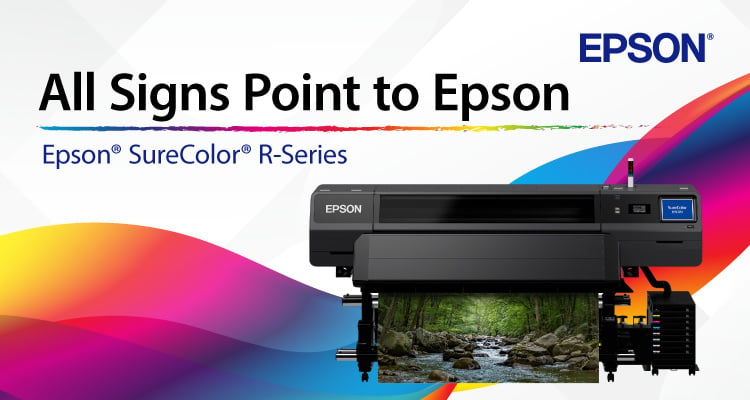
Eco-solvent inks use a milder solvent base that significantly reduces VOC emissions, making them practical for shops without dedicated ventilation systems. They are compatible with a wide range of coated and uncoated vinyls and produce outdoor-durable results suitable for banners, vehicle wraps, fleet graphics, and point-of-purchase displays. Note that eco-solvent prints typically last up to six months outdoors without lamination; lamination is usually recommended for longer-term outdoor applications. For many small- to mid-sized sign shops, eco-solvent remains the most versatile all-around ink system.
Best for: outdoor signage, vehicle wraps, banners, fleet graphics, retail displays.
Limitations: a minimum time of 6-12 hours (OEM recommended) outgassing time is required before lamination to prevent caustic adhesion effects. Solvent inks do have a smell that can be offensive in smaller confined rooms (an air scrubber may be recommended in those cases). Inks need to be disposed of properly in accordance with EPA guidelines. Available in a roll-to-roll only option.
UV Gel Inks
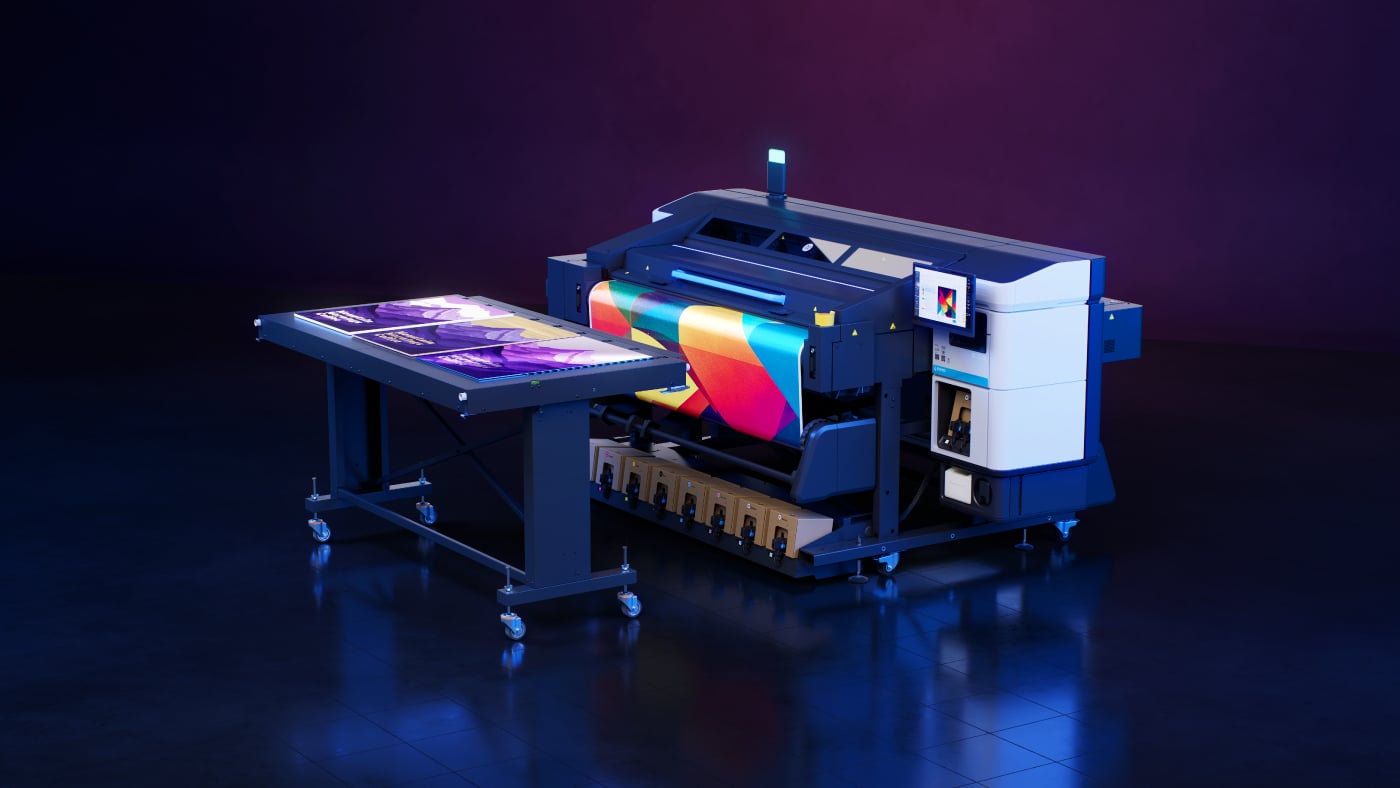
UV Gel ink is a hybrid printing ink technology that combines characteristics of traditional UV-curable ink and a gel-based carrier delivery system. The printer heats the ink so it can jet through the printheads. Once the ink lands on the media, it cools quickly and “gels” in place instead of spreading. UV LED lamps then cure the ink instantly, creating a durable printed image. Advantages include a lower maintenance requirement and modes that can offer different finishes using the same ink (Matte and Gloss) by altering the time at which the ink cures. Both Matte and Gloss can also be used in conjunction on the same print, giving an alternative look to the print. UV Gel also offers a modular system for adding speed modes and white ink for clear or colored substrates. Available in both Hybrid and roll-to-roll printer options.
Best for: wallcoverings, window graphics, retail signage, fleet graphics, posters and banners, interior décor and backlit displays
Limitations: waste Ink must be disposed of properly. UV Gel, although less odorous than solvent and UV, does still have a slight odor. Low Surface energy plastics may require longer slower print times for extra curing. Like traditional UV ink adhesion, it is determined by surface energy, and any unprimed or untreated plastic should be tested for good adhesion.
UV-Curable Inks
UV-curable inks do not dry through evaporation. They cure instantly when exposed to ultraviolet light, which means prints come off the printer ready to handle. This makes UV systems particularly well-suited to high-volume production environments where throughput matters.
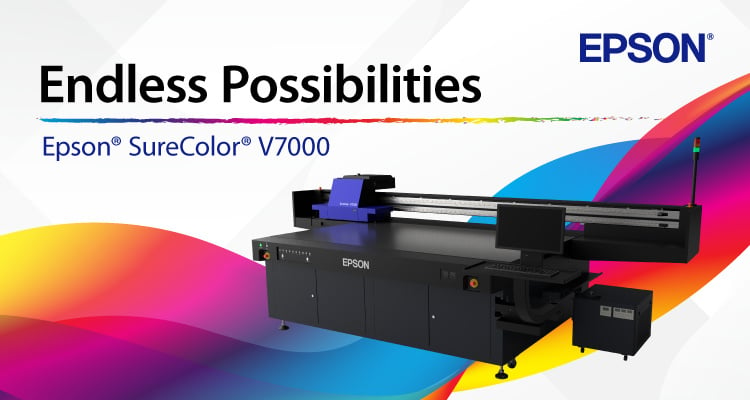
The more significant advantage is substrate versatility. Because UV ink cures on contact rather than absorbing into the material, it can print on surfaces that other ink systems cannot touch: rigid substrates like acrylic, foam board, wood, metal, and glass, as well as flexible vinyl and paper. This opens up a wide range of applications that command higher margins, from architectural displays and dimensional signage to custom decor and retail fixtures. Some UV printers offer white ink and spot varnish options for white printing modes and creating custom spot color graphics with a different finish. White ink also comes in handy when printing to colored vinyl or boards, as well as clear film for windows. Available in hybrid, roll-to-roll, or flatbed options.
UV inks also tend to produce a wide color gamut with strong scratch resistance. Some UV printers support white ink and varnish layers, which adds further creative flexibility for specialty print effects.
Best for: rigid substrate printing, flatbed applications, high-volume production, specialty effects.
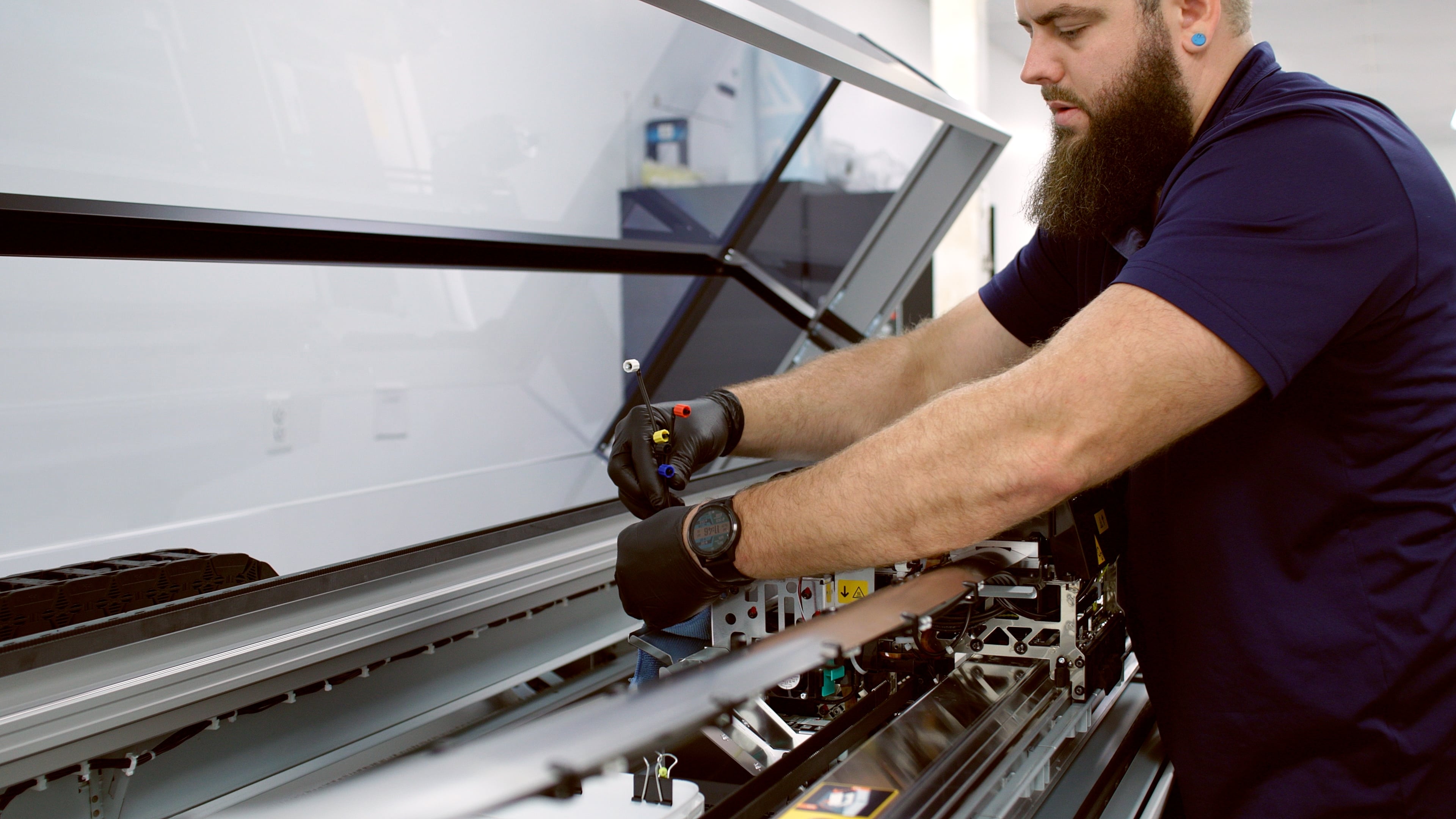
Limitations: UV inks can be less flexible than solvent inks, which matters for applications involving bending or wrapping. They also require UV lamps or LED curing systems, which add to equipment costs. Maintenance on most UV-based machines is manual and on a weekly or every other week basis. Waste ink does need to be disposed of properly. UV ink printers may need extra ventilation in small, constricted rooms. Any unprimed or untreated plastic should be tested for good adhesion.
Latex/Resin-Based Inks
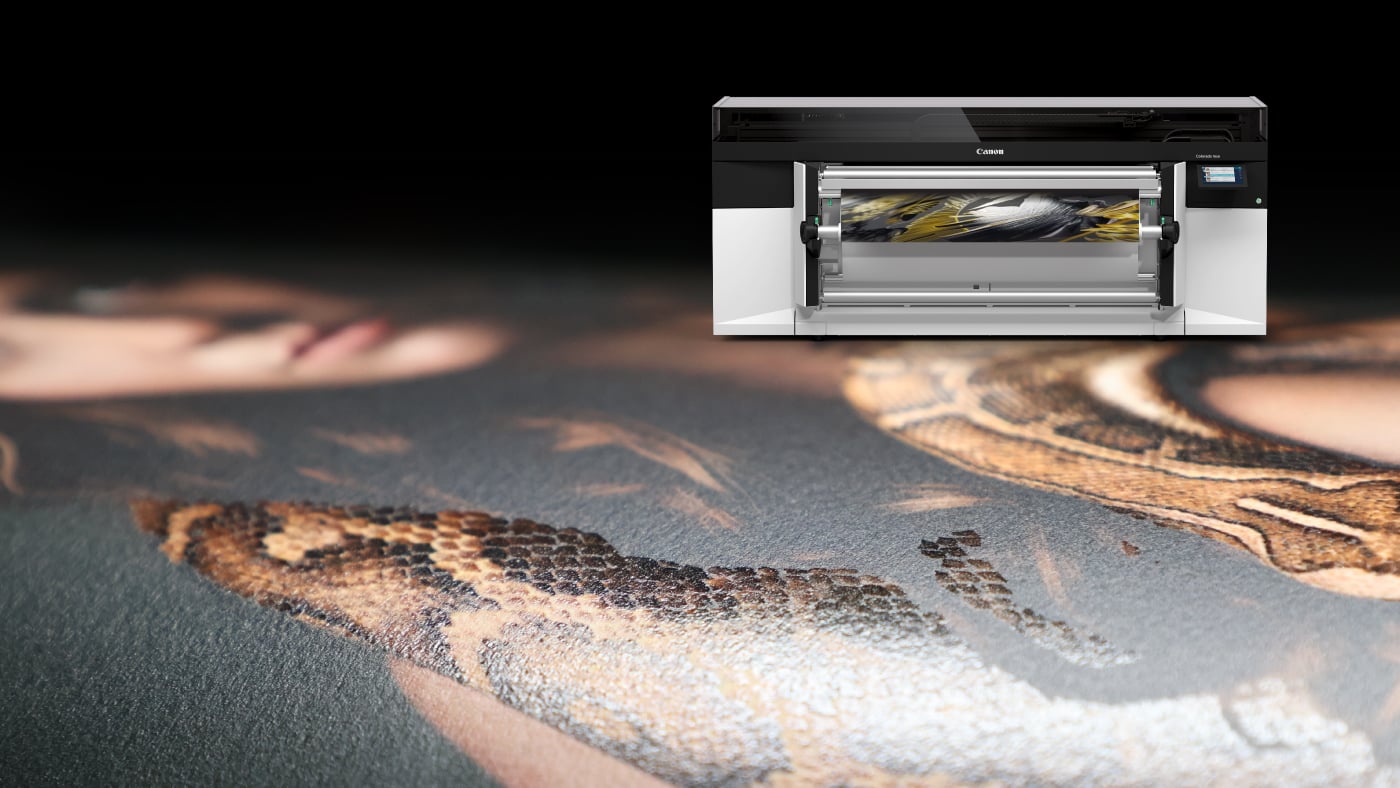
Latex/resin-based inks use water-based chemistry with polymer particles that form a durable film when heat-cured during printing. The result is odorless, free of harsh solvents, and safe for use in environments such as schools, healthcare facilities, and retail spaces where air quality is a concern.
On the production side, latex inks can be printed on a very broad range of media, including coated and uncoated vinyl, fabrics, wallcoverings, canvas, and paper. Latex and resin-based prints are very durable and do not require lamination for most indoor and outdoor applications, which cuts finishing time and materials cost.
Latex and resin have become a strong choice for shops seeking a single-ink system capable of handling both indoor and outdoor applications across diverse substrates. The sustainability profile is also a genuine business advantage, as more clients are asking for documentation of eco-responsible practices. You can explore LexJet's range of wide-format printer ink and toner options to see how latex fits into a broader media strategy.
Best for: indoor and outdoor signage, wallcoverings, fabric, canvas, and environmentally sensitive environments.
Limitations: some latex systems require longer warm-up times. Heat-sensitive materials may have to run at slower speeds and lower temperatures. Latex is available in both roll-to-roll and hybrid options. Resin is only available in roll-to-roll.
Dye Sublimation Inks
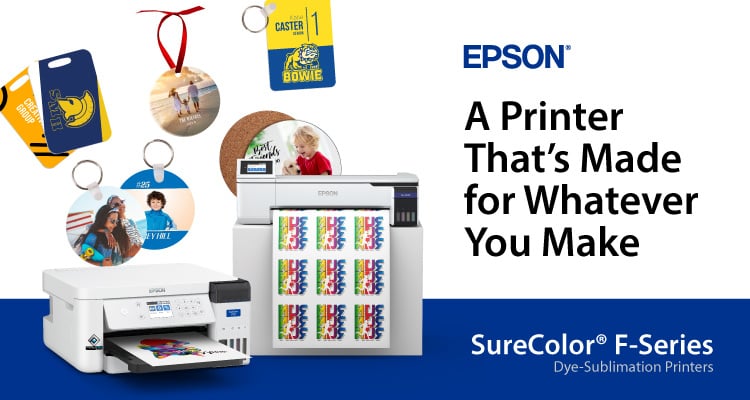
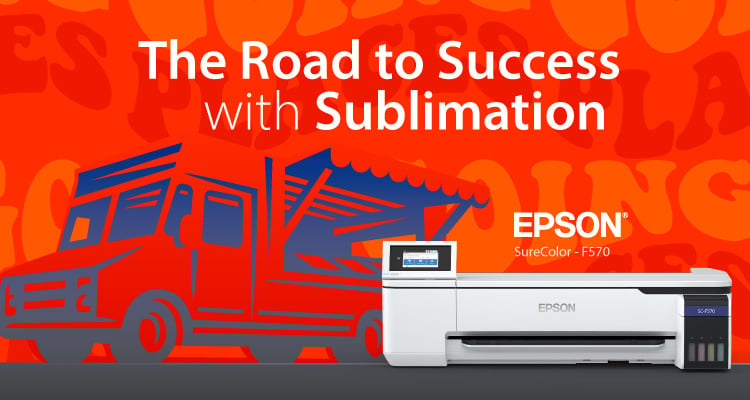
Dye sublimation works differently from every other ink type on this list. The ink is first printed onto a transfer paper, then bonded to polyester fabric or polyester-coated substrates using heat and pressure. During that heat transfer process, the dye converts to a gas and permanently bonds with the polyester fibers, producing a color that is part of the material itself rather than sitting on top of it.
The result is fabric output with excellent color vibrancy that stays soft and flexible, with no cracking or peeling even with repeated washing. This makes dye sublimation the standard for soft signage, trade show displays, retail fabric graphics, flags, custom apparel, and any application where the print needs to flex, drape, or ship without damage.
For print providers, dye sublimation is one of the clearest paths to diversification and margin growth. Soft signage is one of the fastest-growing segments in wide format, and the overlap with apparel and promotional products opens revenue streams that signage work alone cannot reach.
Best for: fabric displays, soft signage, trade show graphics, flags, custom apparel, promotional products.
Limitations: only compatible with polyester or polyester-coated substrates; requires heat press or calender equipment in addition to the printer. Short-term outdoor lifespan on fade resistance compared to Latex, Solvent, and UV. Dye Sublimation is a 2-step process in most cases. Larger inline direct-to-fabric dye sublimation machines are available but require a larger investment.
How to Choose the Right Ink for Your Business
The right ink system depends on three things: the applications you want to offer, the substrates those applications require, and the production environment you are working in.
A shop focused on outdoor signage and vehicle graphics will likely use eco-solvent or latex/resin inks. A shop targeting retail environments, wallcoverings, and interior decor has strong reasons to look at latex/resin, UV, or UV Gel. A shop building a soft signage or apparel revenue stream needs dye sublimation. Many established shops run two or more ink systems to cover different market segments, which is a sound strategy as long as the volume justifies the equipment investment.
It is also worth factoring in the total cost of ownership, not just the hardware price. Ink consumption rates, substrate compatibility, lamination requirements, and maintenance demands all affect real production costs. The wide-format printers available through LexJet span all major ink technologies, and the team can walk you through which platform fits your application mix.
FAQs About Wide-Format Printing Inks
Can I use any ink in my wide-format printer?
No. Wide-format printers are designed around specific ink chemistries, and using incompatible inks can damage print heads and void warranties. Always use inks specified or approved for your printer model. LexJet's ink and toner finder is organized by printer model to make this straightforward.
Which wide-format ink lasts longest outdoors?
Hard solvent and UV-curable inks generally offer the strongest outdoor durability, with unlaminated prints lasting three to five years or more, depending on exposure. Eco-solvent prints typically last up to six months outdoors without lamination; lamination extends that considerably. Latex inks are also outdoor-durable without lamination in most applications. Dye sublimation is not suited for unprotected outdoor use.
Do latex inks really not need lamination?
In many applications, latex prints do not require lamination, which is one of the ink system's practical advantages. That said, lamination still makes sense for applications involving heavy handling, abrasion, or extended outdoor exposure. Your substrate choice will also influence this decision.
Is dye sublimation the same as heat transfer printing?
They use similar equipment but are not identical. True dye sublimation uses a chemical conversion process, turning ink from a liquid state to a gaseous state through pressure and heat that bonds ink permanently into polyester fibers. Standard heat transfer printing uses a film or paper that adheres to the surface. The results and durability differ significantly, with dye sublimation generally producing superior wash fastness and color depth for fabric applications.
%20200-86.png?width=200&height=86&name=LexJet_PNG%20(1)%20200-86.png "LexJet")



.jpg)

Post a comment