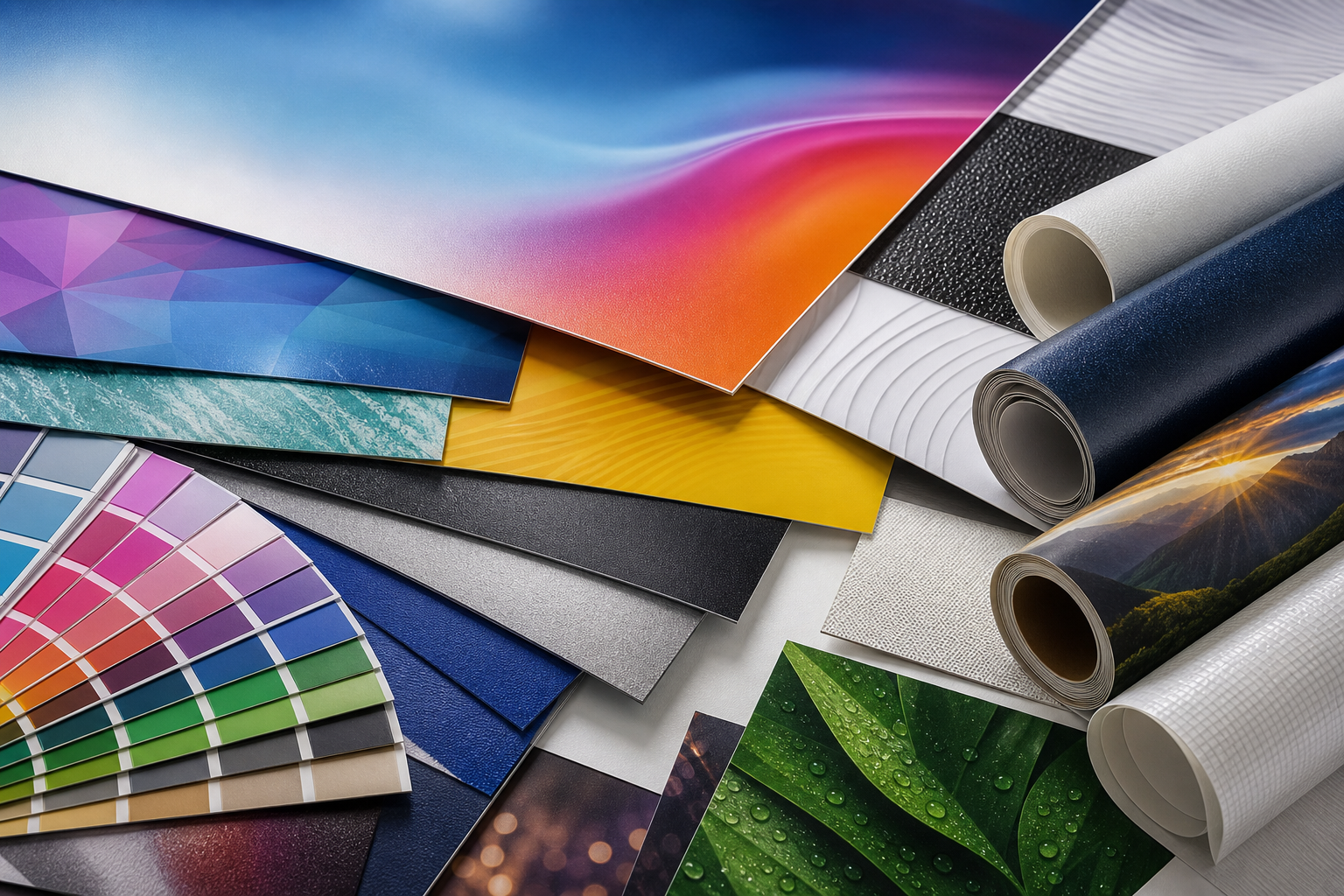
The printer and ink get most of the attention in wide-format production, but the material you print on has just as much influence over the final result. Print media affects how ink is absorbed, how color renders, how long drying takes, and how well a finished piece holds up to lamination, cutting, mounting, or installation.
Media Is Part of the Print System
Printer, ink, and media work together
The same file printed on two different materials can look like two different jobs. Glossy photo paper and matte fine art paper will render the same image with different contrast, color depth, and tonal range, even on identical equipment with identical settings. Coating weight, surface texture, ink absorption rate, and white point all influence the output. Choosing wide-format media without accounting for ink compatibility or printer capability introduces variables that are hard to correct after the fact.
The wrong media creates production problems
Mismatched media shows up quickly in production. Common symptoms include dull or shifted color, slow or uneven drying, smudging during handling, media curling off the roll, scuffing on the print surface, and lamination failures where the film won't bond cleanly. Every one of those problems can mean reprints, which affects both turnaround time and material cost. Most of them are avoidable with the right media selection upfront.
How Media Affects Color Quality
Coating and white point change color output
Coated media with a bright white base will make colors appear more saturated and vivid. Warm-toned fine art papers shift the color slightly toward yellow, which suits photographic prints and reproductions but requires adjustment for branded graphics where color accuracy is critical. Canvas surfaces absorb ink differently than coated papers, producing a softer color rendering that works well for wall art and décor but less well for applications that require sharp edge detail.
Finish affects contrast and detail
Gloss and satin finishes tend to produce deeper blacks and more perceived contrast, which benefits photography and highly detailed graphics. Matte finishes reduce glare and give a softer appearance, making them a better fit for fine art reproductions, reading environments, or locations with difficult lighting. Textured surfaces add visual depth but can reduce sharpness at fine detail scales. The finish is not just an aesthetic choice; it affects how the print reads in its final environment.
Media profiles support color consistency
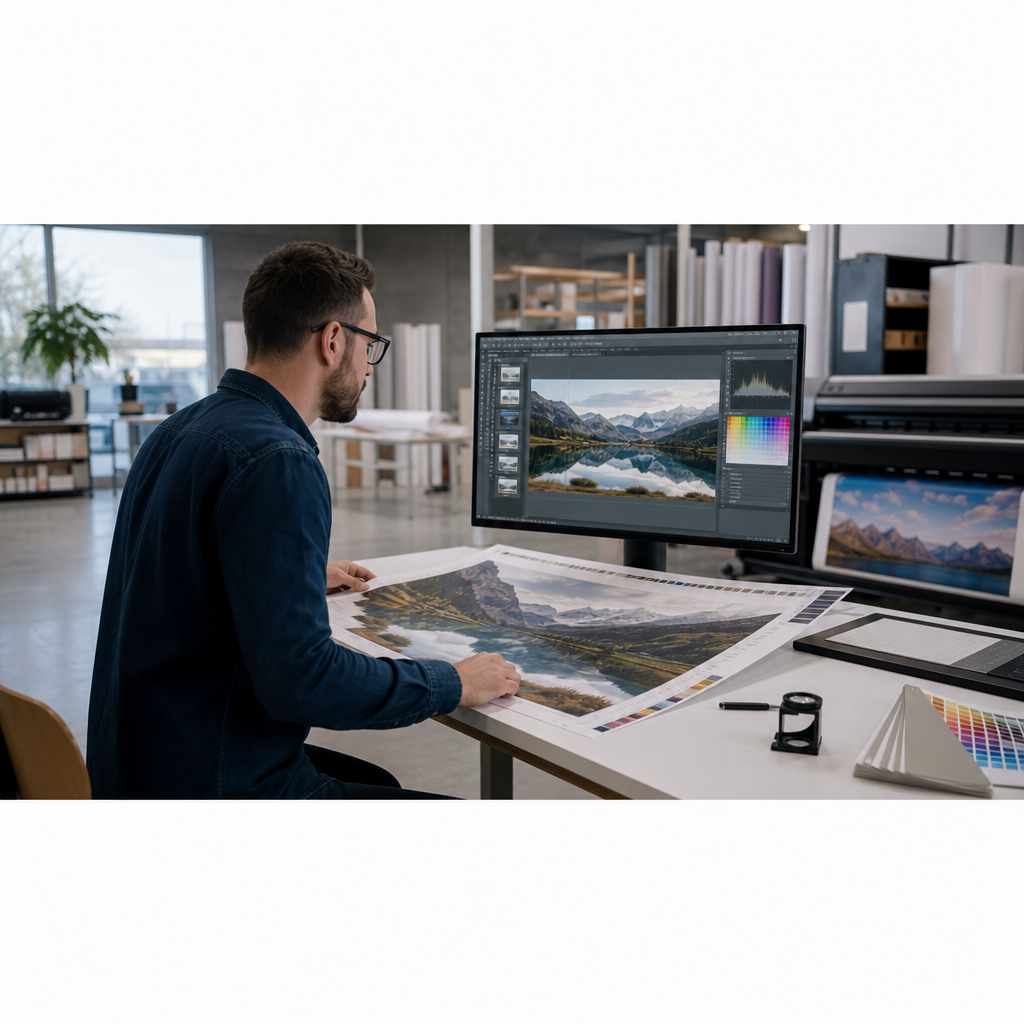
A properly built ICC profile matched to a specific media and printer combination gives operators a reliable starting point for color-critical work. For shops producing branded graphics, fine art reproductions, or photography where a client expects consistent results across multiple prints or reprints, media profiles are what make that consistency achievable. Printing on profiled large-format printer media reduces guesswork and the number of test prints needed to hit an approved color.
How Media Affects Drying and Finishing
Drying time affects production speed
Some media absorbs ink quickly and moves through the workflow with minimal dwell time. Others, particularly heavily coated papers and some films, need more time before they can be handled, trimmed, or laminated without risk of smearing or surface damage. In a busy shop, slow-drying media creates a production queue problem. Knowing the drying characteristics of your materials before a deadline is part of realistic scheduling.
Lamination depends on media compatibility
Not every media laminates cleanly. Some surfaces require specific adhesive films or thermal settings to bond correctly. Getting this wrong produces bubbling, delamination, or edge lifting, particularly on outdoor applications where temperature cycling and moisture put additional stress on the bond. For jobs that need durability, abrasion resistance, or UV protection, confirming lamination compatibility with the base media before production is worth the time.
Cutting, mounting, and stretching vary by material
Vinyl has different cut and handling characteristics than paper. Canvas stretches and staples. Fabric needs heat or tension finishing. Rigid display media requires scoring or routing rather than blade cutting. The finishing method has to match the material, and in some cases the material needs to be chosen with the finishing method already in mind. A canvas print destined for gallery stretching needs enough border, the right weight, and a coating that won't crack at the fold.
Different Types of Print Media and When to Use Them
Photo and fine art papers
Coated photo papers and fine art papers are the standard for photographic prints, art reproductions, gallery work, and premium wall décor. They range from high-gloss RC papers to soft-textured cotton rag stocks, each with distinct color-rendering characteristics suited to different output goals.
Canvas
Canvas is used for wall art, gallery wraps, photography, and interior décor printing. It produces a warmer, more tactile result than paper and is the default substrate for stretched gallery pieces. Coating quality and weave texture vary significantly across canvas products and affect both image quality and how the material handles during finishing.
Adhesive vinyl and films
Cast vinyl, calendered vinyl, clear films, and specialty adhesive materials cover a wide range of applications: decals, wall graphics, window graphics, floor graphics, retail displays, and vehicle graphics. Cast vinyl conforms to curves and textured surfaces; calendered vinyl is better suited to flat applications. The right choice depends on the surface, the install method, and how long the graphic needs to perform.
Banner, display, and specialty media
Scrim vinyl banners, backlit film, fabric, wallcovering material, and event display media each serve specific signage and promotional applications. Backlit film requires different ink density settings than reflective media. Fabric needs finishing appropriate to the display system. Understanding different types of print media and their application fit helps shops avoid using the wrong substrate for jobs with specific performance requirements.
How to Choose the Right Media
Start with the final application
Where is the print going, how long does it need to last, and what does the customer expect when they see it? An indoor retail display has different durability requirements than an outdoor banner or a fine art print destined for framing. Starting with the end use quickly narrows the media options.
Factor in finishing before printing
If a job requires lamination, decide on the laminate before choosing the base media, not after. The same logic applies to contour cutting, canvas stretching, fabric tensioning, or flush mounting. The finishing process puts specific demands on the substrate, and working backward from the finished piece produces better results than working forward from whatever media is already in stock.
Test before full production
A test print on a new media saves time and material on a full production run. Check color rendering, drying time, surface handling, and lamination bond before committing. For color-critical applications, a test print also gives the operator a chance to adjust the profile or settings before the job is on deadline.
How LexJet Can Help
Choosing the right large-format media for a specific printer, ink set, and application is not always straightforward. LexJet can help shops identify compatible media options, understand how different substrates will affect color and finishing, and source supplies reliably across wide-format printers and ink systems.
The Media Choice Follows You Through the Whole Job
Media selection is not a purchasing decision made in isolation. It affects color output, drying time, finishing compatibility, durability, and how the finished piece performs in its final location. Choosing the right wide-format printer ink and media combination from the start reduces reprints, speeds up finishing, and gives customers results they come back for.
Whether you're producing wall graphics, retail displays, fine art prints, vehicle graphics, or signage, LexJet can help you identify the right media, printer, and workflow combination for consistent results and profitable production.
%20200-86.png?width=200&height=86&name=LexJet_PNG%20(1)%20200-86.png "LexJet")



.jpg)

Post a comment